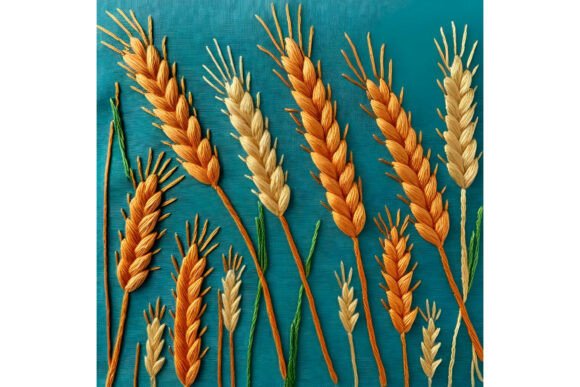
Embroidery Wheat Ear Background
A Practical Review for Small Business Merch & Branded Patches
As an embroidery designer who’s developed hundreds of commercial designs for cafés, boutiques, bakeries, florists, and handmade brands, I approached Background with Embroidery Wheat Ear with a very specific question: *Can this work as functional, brand-forward embroidery—not just a decorative graphic?* The answer isn’t simple, but it’s actionable—and that’s what matters when you’re stitching for real customers.
First Impression: Rustic Charm Meets Quiet Confidence
Even before opening the JPG file, the title signals something intentional: “Embroidery Wheat Ear” suggests organic texture, artisanal warmth, and grounded elegance. Wheat is universally associated with growth, harvest, authenticity—ideal for small businesses that lean into craftsmanship, sustainability, or local roots. It’s not flashy or trendy; it’s timeless. That makes Background with Embroidery Wheat Ear especially strong for brands avoiding overdesigned logos—think a neighborhood bakery stamping wheat motifs on aprons, or a botanical studio using it as a subtle sleeve accent on staff uniforms.
Real-World Performance Across Merch Categories
This design shines where subtlety and storytelling intersect:
- Embroidered patches: Works beautifully as a standalone chest patch (e.g., on denim jackets or canvas totes) or as a border element framing a business name. Its open composition allows breathing room—critical for clean patch edges.
- Apron embroidery: Ideal for lower-corner placement or along the waistband. The wheat motif reads well at medium scale and reinforces a handmade, earth-connected identity without overwhelming function.
- Cap embroidery: Best used on the side or back panel—not the front crown—where its horizontal flow complements curvature naturally. Avoid cramming it into a tiny front arch.
- Tote bag design: Perfect as a repeatable background texture behind a centered logo or tagline. Since it arrives as a JPG, it’s easily tiled in layout software for printable mockups or digital previews.
- Product packaging accents: Print it small on fabric labels, hang tags, or stitched-on ribbon seals. Its organic lines soften rigid branding and elevate perceived value.
- Staff uniforms & work shirts: Use it minimally—a single ear near a pocket or cuff adds cohesion without clutter. It signals care in detail, which customers notice.
Where to Proceed With Intention
Background with Embroidery Wheat Ear isn’t plug-and-stitch magic. Here’s where thoughtful execution matters:
- Small patch sizes (under 2”): Simplify or isolate one ear rather than scaling the full background down. Overcrowding loses definition and increases stitch density unpredictably.
- Curved surfaces (caps, sleeves): Test hoop placement first. The natural arc of wheat stems helps—but avoid stretching the design unnaturally across seams.
- Dark or textured fabric: This JPG-based design needs careful thread color selection. Rich golds, oat tones, or charcoal grays often read better than pure black on navy twill or linen blends.
- Frequent washing: While wheat motifs aren’t inherently high-density, overlapping stems could create tight stitch clusters. Confirm spacing in your embroidery file before digitizing—especially if converting from JPG to machine embroidery design.
- Commercial embroidery projects: Remember—you’re receiving a JPG only. It’s a starting point, not a production-ready embroidery file. Digitizing quality will directly impact durability, cost, and finish.
Brand Identity Impact: More Than Just Aesthetic
When used intentionally, Background with Embroidery Wheat Ear strengthens brand identity by reinforcing values—craft, integrity, growth, seasonality. A florist using it on staff aprons subtly tells customers they source thoughtfully. A pet wellness brand applying it to tote bags implies natural care. That consistency builds recognition faster than a flashy logo alone.
It also elevates perceived professionalism. Unlike clipart-style graphics, wheat motifs carry heritage weight—suggesting legacy, patience, and attention to detail. That translates to higher customer trust, especially in markets where handmade product credibility is currency (Etsy shops, farmers’ markets, boutique pop-ups).
Crucially, it supports visual consistency across touchpoints: a cap embroidered with a single wheat stem echoes the same motif on a product label or Instagram story banner—creating cohesion without repetition fatigue.
Practical Designer Notes Before You Stitch
Before sending Background with Embroidery Wheat Ear to production—or sharing it with clients—run these checks:
- View it in black and white first. Does contrast hold? If stems blur together, simplify manually before digitizing.
- Test at your target patch size (e.g., 1.5” wide). Does negative space stay legible? Adjust spacing if needed.
- Review thread color pairings on actual fabric swatches—not just screen previews.
- Confirm hoop size compatibility. Horizontal wheat layouts may require wider hoops (e.g., 4” x 4” or larger).
- Stabilize appropriately: lightweight cutaway for knits, tear-away for stable cottons, and mesh for caps.
- Create a printable mockup for client approval—this avoids costly rework later.
- Compare it beside your other design assets. Does it harmonize with your logo, typography, and color palette?
- Verify commercial licensing. Since this is a digital embroidery file sold as a JPG in a zip archive, confirm usage rights apply to your intended business context—including resale on physical goods.
Final Thought: A Foundation, Not a Finish
Background with Embroidery Wheat Ear belongs in the Backgrounds category for good reason—it’s a versatile base layer, not a standalone hero. Its strength lies in adaptability: it can ground a bold brand mark, soften industrial packaging, or add quiet sophistication to a craft business’s entire merch ecosystem. For small business owners and embroidery shops alike, it’s less about what the design *is*, and more about how thoughtfully it’s applied. Used with intention—as part of a cohesive system of design assets, fabric choices, and brand voice—it becomes far more than wheat. It becomes meaning, stitched.