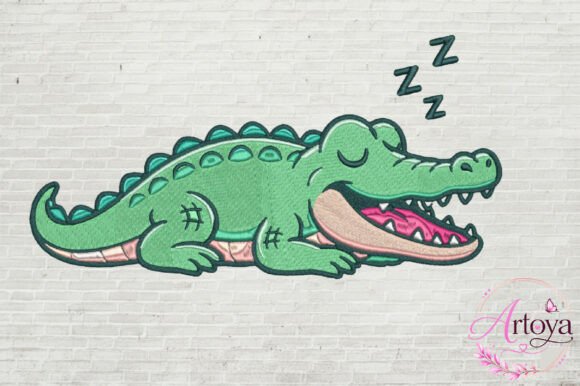
Sleeping Alligator Embroidery Design
First Impressions: Soft, Playful, and Instantly Recognizable
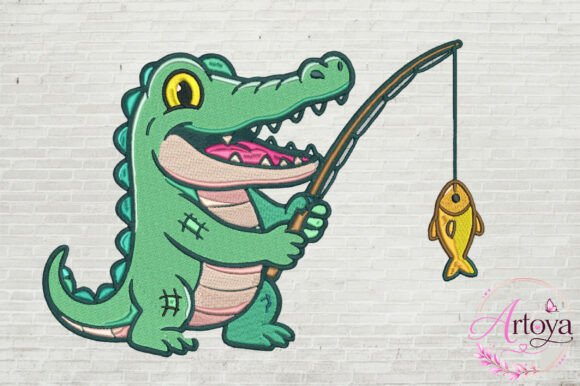
When I opened the Sleeping Alligator Embroidery Design file, I didn’t just see a cartoon reptile—I saw a mood. That’s rare. This isn’t a fierce or hyper-detailed alligator; it’s a kawaii-style gator curled up mid-nap, belly slightly rounded, eyes closed, tiny arms tucked in like a plush toy. The shape is compact and friendly, with gentle curves and minimal sharp angles—ideal for machine embroidery where stitch integrity matters. It reads as warm, approachable, and quietly humorous—not silly, not saccharine, but genuinely charming. That tone makes it versatile: equally at home on a baby onesie as it does on a boutique apron or an Etsy tote bag.
A Real-World Test: Stitching It on a Linen Tea Towel
Last week, I used the Sleeping Alligator Embroidery Design to embellish a set of organic linen tea towels for a local kitchenware shop. Why linen? Because it’s unforgiving—loose weave, low stretch, zero forgiveness for poor stitch density or unstable underlay. I chose a medium-weight cutaway stabilizer, ran a test on scrap first (non-negotiable), and stitched it at 4.5" wide. The result? Clean satin-stitched edges around the outline, soft fill-stitch body texture, and no puckering—even on the curved tail and rounded snout. The design held its expression: sleepy, sweet, and unmistakably *alive*. Customers responded instantly—several asked if it came in other animal poses. That tells me this isn’t just decoration; it’s a subtle brand signal.
Where It Shines—and Where It Needs Thought
- Custom apparel: Works beautifully on sweatshirt cuffs, chest pockets, and toddler hoodies—but avoid placing it over seams or heavy ribbing without extra stabilizer.
- Baby embroidery: Ideal for burp cloths, swaddle blankets, and nursery pillows. Its simplicity avoids overwhelming small-scale items.
- Embroidered patch: Easily converts to a sew-on or iron-on patch. The clean outer edge and balanced negative space make it cut cleanly.
- Tote bag design: Pops on canvas or cotton duck—especially when paired with minimalist typography (“Nap Time Approved” was a hit).
- Holiday embroidery: Surprisingly effective for Easter or summer-themed gifts. Paired with a tiny sun or palm frond, it reads seasonal without being literal.
Design Nuances That Matter in Production
This isn’t a “drop-and-stitch” file—it rewards attention. The eyelids are outlined with a fine running stitch, not filled, which keeps them readable even at smaller sizes. The belly curve uses graduated fill stitch density: lighter near the center, denser at the edges—so it doesn’t look flat or muddy. That kind of intentionality means less rework during production. But it also means you’ll want to check how those delicate eyelid lines translate on dark fabric. I tested it on navy twill with white thread: crisp, yes—but only because I increased top tension slightly and used high-sheen polyester thread. On black terry cloth? I’d add a layer of tear-away topping. Always test.
Fabric & Fit Considerations You Can’t Skip
The Sleeping Alligator Embroidery Design is forgiving on stable fabrics—cotton poplin, medium-weight denim, quilting cotton—but tread carefully with:
- Stretchy fabric: Knits need ballpoint needles, light stabilizer, and possibly reduced stitch speed. The rounded form can distort if the base fabric shifts.
- Textured surfaces: Terry cloth or bouclé requires topping + cutaway backing. Without it, stitches sink into the pile and lose definition.
- Curved surfaces (caps, hats): It’s doable—but only if your hoop accommodates the front curve without distortion. I recommend using a cap frame and reducing size to 3.25" max.
- Thin fabric (like baby muslin): Use lightweight tear-away + basting spray. Too much stabilizer overwhelms the drape; too little causes shadowing.
What It Does for Your Craft Business—Beyond Aesthetics
As an Etsy seller and small shop product developer, I judge designs not just by how they stitch—but by how they land with buyers. The Sleeping Alligator Embroidery Design builds trust: its clarity signals craftsmanship, its warmth invites connection. When customers see that sleepy face on a handmade pillow cover, they don’t just register “cute”—they register *care*. That perception lifts perceived value, supports premium pricing, and encourages repeat orders. For digital embroidery file sellers, this is a strong anchor design: easy to bundle (“Sleepy Animal Pack”), pair with coordinating fonts, or use in printable mockups that feel cohesive and intentional.
Practical Designer Notes Before You Stitch
Before adding the Sleeping Alligator Embroidery Design to your next project, do these five things:
- Run a test stitch on scrap fabric matching your final substrate—especially if using textured, dark, or stretchy material.
- Check thread color contrast: what reads softly on cream may vanish on oatmeal. Try it in grayscale mockups first.
- Review stitch density in your embroidery software—if it’s over 12,000 stitches, consider simplifying fill areas for delicate fabrics.
- Confirm hoop size compatibility: this design fits comfortably in a 5x7 hoop, but verify before hooping expensive garments.
- Inspect small details (eyelids, toes, tail tip) at 200% zoom—then stitch them at half-size to confirm legibility.
And one last note: if you plan to sell finished products or resell the digital embroidery file, confirm licensing terms directly with the creator. Not all machine embroidery design licenses cover commercial embroidery or digital redistribution—even when marketed to craft businesses.
Final Thought: A Design That Earns Its Place
The Sleeping Alligator Embroidery Design doesn’t shout. It naps—and somehow, that makes it memorable. It’s proof that thoughtful restraint in shape, stitch, and expression translates directly to real-world appeal: on a baby gift, a boutique apron, or a custom embroidered patch. It’s not just another animal embroidery file. It’s a quiet, confident design choice—one that supports your voice as a maker, strengthens your brand’s emotional resonance, and reminds customers why handmade still matters.