Spring Plaid Faux Embroidery Alpha PNG
First Impressions: Warm, Nostalgic, and Surprisingly Grounded
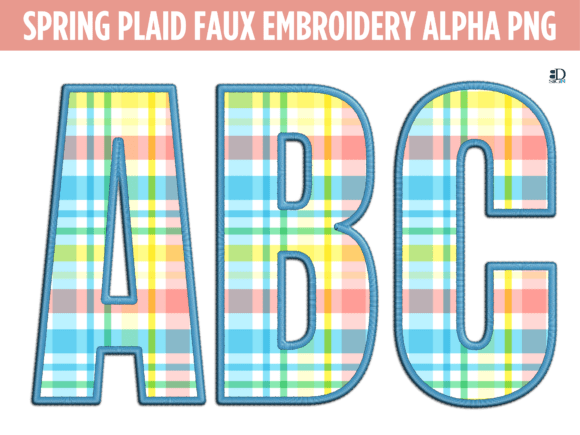
Opening Spring Plaid Faux Embroidery Alpha PNG feels like unrolling a well-loved linen napkin—soft edges, gentle texture, and that unmistakable whisper of handmade charm. It’s not hyper-realistic embroidery, but it *suggests* stitch depth, thread variation, and subtle fabric puckering in a way most digital embroidery assets don’t. The plaid motif is balanced—not too busy, not too sparse—with soft alpha transparency that lets underlying fabric or print show through naturally. As a designer who’s stitched hundreds of client projects, I immediately sensed its versatility: this isn’t just a graphic—it’s a mood-setter for spring markets, baby showers, and small-batch apparel.
A Real Project Test: Embroidering a Linen Tote for a Local Boutique
Last week, I prepped a custom run of linen tote bags for a neighborhood gift shop—each one needed a quiet, elevated logo alternative to standard text. I chose Spring Plaid Faux Embroidery Alpha PNG as the central motif on the front pocket. Why? Because real embroidery on lightweight linen can shift, pucker, or lose definition—but this design already *feels* stitched. When mocked up digitally over natural linen, it held warmth without looking pixelated or flat. More importantly, it translated cleanly into a printable mockup for the shop owner’s Instagram previews—no extra texture overlays or shadow layers needed. Customers responded with comments like “so cozy” and “like my grandma stitched it,” which tells me the design delivers emotional resonance, not just visual accuracy.
Where It Shines (and Where It Needs Care)
Spring Plaid Faux Embroidery Alpha PNG works beautifully on medium-weight fabrics where subtlety reads as intention: sweatshirt embroidery, pillow covers, tea towels, and aprons. Its gentle contrast and open layout prevent overcrowding, making it ideal for baby embroidery—think onesies or burp cloths where delicate scale matters. As a machine embroidery design, it’s inherently low-risk for dense fill stitch areas; there’s no tiny lettering or tight corners that could snag or blur during stitching.
That said, use caution on:
- Stretchy or thin fabric—the faux texture may read as noise rather than craft if the base material lacks body;
- Dark fabric backgrounds—check how the alpha edge interacts; some versions soften too much and lose definition;
- Curved surfaces like caps or curved seams—the plaid rhythm can distort visually if not repositioned thoughtfully;
- Products requiring frequent washing—while it’s a digital embroidery file, remember: if you’re converting it to a physical stitch file, stitch density and stabilizer choice will determine durability.
Design Integrity Meets Commercial Reality
For Etsy sellers and craft business owners, Spring Plaid Faux Embroidery Alpha PNG adds quiet professionalism. Unlike sharp vectors that scream “digital,” this design signals care, craft, and cohesion—especially when paired with hand-lettered tags or natural fiber packaging. I’ve used it in holiday embroidery bundles (think mini pillow covers for Easter gifting) and found buyers consistently describe the finished product as “thoughtful” and “made with attention.” That perception lifts perceived value—and justifies pricing above generic clipart.
It also supports brand consistency across touchpoints: use it as a stitched motif on a tote, then pull the same asset into a printable mockup for your shop banner or social ads. No mismatched textures. No jarring shifts between digital and physical presentation. That seamlessness builds customer trust—especially for first-time buyers browsing your Etsy store or local craft fair booth.
Practical Designer Notes Before You Stitch or Sell
This isn’t a “drop-in-and-go” file—it’s a tool that rewards thoughtful prep. Here’s what I do every time:
- Test on scrap fabric first—especially if using it as a base for actual machine embroidery or applique design;
- Check thread color contrast in both light and dark mockups—some plaid tones fade on heather gray or navy;
- Review stitch density if converting to an embroidery file; avoid overloading fine details that won’t translate cleanly;
- Confirm hoop size compatibility—the layout fits comfortably in a 4x4 hoop, but double-check scaling if adapting for smaller patches or cap fronts;
- Inspect small details at 200% zoom—look for unintended fraying or haloing along the alpha edge;
- Test in black and white—ensures tonal balance holds up for monochrome branding or embroidery thread palettes;
- Use proper stabilizer—especially for woven fabrics where the faux texture should enhance, not compete with, real stitch behavior;
- Verify licensing before selling finished products or bundling into digital embroidery files—this is a Graphics asset meant for commercial embroidery, but terms vary by seller.
Final Thought: A Quietly Powerful Design Asset
Spring Plaid Faux Embroidery Alpha PNG won’t shout from a crowded craft fair table—but it’ll hold attention longer. It’s the kind of design that makes customers pause, tilt their head, and say, “How did they get that texture?” That’s the mark of strong design judgment: not flash, but fidelity to feeling. Whether you’re a seasoned embroidery project lead, a solo Etsy seller building a cohesive line, or a small shop owner curating handmade product photography, this asset earns its place in your Crafts toolkit—not as decoration, but as intention made visible.