Dog Cat Machine Embroidery File
A Practical Review for Small Business Merch & Branded Patches
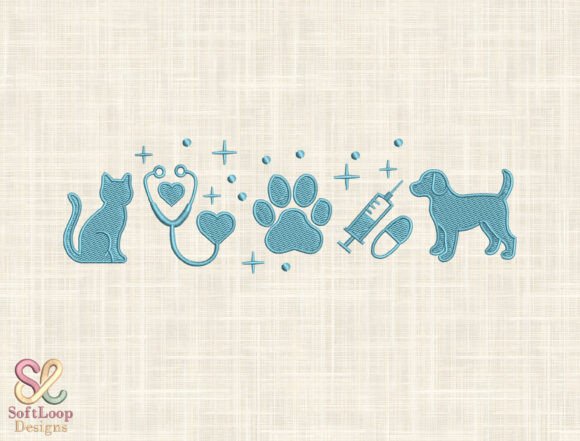
As an embroidery designer who’s digitized and stitched thousands of designs for small businesses—from pet boutiques and veterinary clinics to artisan bakeries and handmade studios—I approached the Dog Cat Machine Embroidery File with both curiosity and critical intent. The title alone signals clear audience alignment: animal lovers, pet-care professionals, and brands building warmth into their identity. And the description—“a professional and heartwarming Veterinary Pet Care Icons Embroidery Design 🩺🐾✨… whimsical horizontal design”—immediately sets expectations: this isn’t just decorative; it’s purpose-built for storytelling and service recognition.
First Impression: Friendly, Professional, and Visually Cohesive
The Dog Cat Machine Embroidery File reads as approachable yet polished—ideal for businesses that balance expertise with empathy. “Whimsical horizontal design” suggests thoughtful composition: likely balanced iconography (paw, stethoscope, maybe a gentle silhouette of dog and cat), clean negative space, and rhythm that works across varied merchandise formats. It avoids cartoonish exaggeration while retaining charm—a crucial nuance for brands wanting to signal credibility *and* care. For a local vet clinic’s staff aprons or a pet-friendly café’s tote bags, that duality builds instant trust. It feels handmade in spirit but engineered for commercial embroidery reliability.
Real-World Performance Across Business Applications
In practice, the Dog Cat Machine Embroidery File shines where small business merch needs clarity, consistency, and emotional resonance:
- Embroidered patches: Its horizontal layout translates beautifully to woven or chenille-style patches—ideal for sewing onto jackets, backpacks, or boutique packaging. The icons hold legibility even at 2.5" width.
- Staff uniforms & aprons: Positioned on the left chest or upper sleeve, it communicates mission without clutter. The design’s moderate scale and open structure prevent visual heaviness on cotton twill or denim.
- Cap embroidery: Works best on structured front panels—not curved back straps—where the horizontal flow stays intact and stitch density remains manageable.
- Tote bag design & product labels: As a subtle corner accent or centered chest mark, it adds branded warmth to reusable bags, gift tags, or handmade product wraps—especially for pet treat makers or rescue-centered Etsy sellers.
- Custom apparel & event merch: Paired with minimalist typography (“Paws & Purpose” or “Care With Claws”), it becomes a signature motif for adoption fairs, pet wellness workshops, or local business collaborations.
Where to Use It Thoughtfully
Even strong designs have context limits—and smart small business owners know when to adapt. With the Dog Cat Machine Embroidery File, proceed with extra attention on:
- Small patch sizes (<2"): Test first. Whimsical details (e.g., tiny stethoscope curves or paw pad texture) may blur or vanish below 1.75". Simplify or request a scaled-down variant if precision is non-negotiable.
- Curved surfaces (like cap fronts or knit polos): Ensure your digitizer confirmed underlay and pull compensation. High stitch density in tight curves can cause puckering on lightweight fabrics.
- Dark uniforms or textured fabric (twill, canvas, fleece): Verify thread color contrast—light neutrals (ivory, heather gray) often outperform stark white on charcoal or navy. Also, use cutaway stabilizer for consistent registration on looped or napped surfaces.
- Frequent washing or high-friction use (e.g., apron pockets, tote handles): Confirm satin-stitch coverage and outline reinforcement. Delicate icon outlines may fray over time without proper density balance.
How It Strengthens Brand Identity & Customer Connection
The Dog Cat Machine Embroidery File does more than decorate—it reinforces brand values at a glance. For a mobile pet groomer, it signals compassion and competence before the first introduction. For a handmade soap brand with rescue partnerships, it quietly affirms shared ethics. That visual shorthand builds recognition faster than text alone. Customers remember how a logo *feels*: warm, trustworthy, human-centered. When stitched cleanly on an apron or tote, it elevates perceived product value—transforming functional items into branded keepsakes. And for Etsy sellers or craft studios, it delivers cohesive design assets across physical and digital touchpoints (think printable mockups for social posts or packaging inserts).
Essential Embroidery Designer Notes for Business Use
Before stitching your first batch, apply these field-tested checks:
- Test in black and white first: Print the design outline to assess spacing, icon separation, and overall rhythm—no thread distractions.
- Check small-patch viability: Resize digitally to 2", then 1.5", and scan for lost detail or overcrowding.
- Review thread color contrast: Simulate on your target fabric swatch—not just screen. A “soft mint” thread may disappear on sage linen.
- Inspect spacing & density: Look for isolated satin columns or thin jump stitches that could snag during wear or washing.
- Confirm hoop size compatibility: Horizontal layouts often require larger hoops (e.g., 4" x 4" or 5" x 7"). Verify your machines support it—or adjust placement accordingly.
- Test on real fabric + stabilizer: Run a sample on your exact uniform twill or tote canvas. Adjust tension and stabilizer type based on results—not assumptions.
- Create a client-approved mockup: Show stitched samples on garment photos—not just vector renders—to align expectations early.
- Compare beside existing design assets: Does it harmonize with your current logo, font system, and color palette? Consistency compounds recognition.
- Confirm commercial licensing: Since this is for small business merch, ensure your purchase includes rights for resale, promotional use, and unlimited production runs. If unclear, contact the seller before bulk digitizing.
The Dog Cat Machine Embroidery File isn’t just another Animals-category Embroidery download. It’s a strategic tool—one that helps pet-focused and care-centered small businesses stitch their values directly into the products their customers see, wear, and remember. Used intentionally, it turns everyday merchandise into quiet ambassadors of compassion, professionalism, and community connection.